
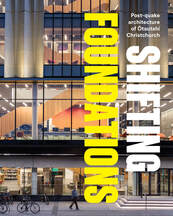
Dorset Street Flats featured in a new compendium of Christchurch post-quake architecture.
Dorset Street Flats
Original: F. M. Warren, 1956-57 (later Warren & Mahoney).
Restoration: Young Architects, 2021
A new style, new materials and a new type of residential living were all combined in Sir Miles Warren's pioneering Dorset Street Flats, a forerunner of the style that became Christchurch's own: the Christchurch Modern or Christchurch Style. According to Heritage New Zealand, the Dorset Street Flats are one of the most important domestic buildings in twentieth-century Aotearoa.
The flats introduced Christchurch to the bachelor pad and a new way of urban living, but also to a young architect establishing their vocabulary and craft. The honest relationship with the materials - load-bearing concrete-block walls and concrete beams are exposed - were unfamiliar to the tradesmen involved in the original build. Both the builders and the architect were to hone their skills with subsequent designs.
The flats sustained significant damage in the February 2011 earthquake, which caused liquefaction beneath the building floor plate, the two blocks to settle differentially and fracture due to land movement, and cracking in the concrete work. After 11 years of restoration work, a mammoth task that involved bringing the building up to 70 per cent of the code while staying true to the original design, the flats are once again habitable. Liveability improvements were made along the way, including insulation, heating and waterproofing.
Emma Johnson
Photography by Dennis Radermacher
Shifting Foundations: Post-quake Architecture of Ōtautahi Christchurch, Freerange Press, 2023, ISBN: 978-0-473-65966-0, pp. 208-209.
Dorset Street Flats
Original: F. M. Warren, 1956-57 (later Warren & Mahoney).
Restoration: Young Architects, 2021
A new style, new materials and a new type of residential living were all combined in Sir Miles Warren's pioneering Dorset Street Flats, a forerunner of the style that became Christchurch's own: the Christchurch Modern or Christchurch Style. According to Heritage New Zealand, the Dorset Street Flats are one of the most important domestic buildings in twentieth-century Aotearoa.
The flats introduced Christchurch to the bachelor pad and a new way of urban living, but also to a young architect establishing their vocabulary and craft. The honest relationship with the materials - load-bearing concrete-block walls and concrete beams are exposed - were unfamiliar to the tradesmen involved in the original build. Both the builders and the architect were to hone their skills with subsequent designs.
The flats sustained significant damage in the February 2011 earthquake, which caused liquefaction beneath the building floor plate, the two blocks to settle differentially and fracture due to land movement, and cracking in the concrete work. After 11 years of restoration work, a mammoth task that involved bringing the building up to 70 per cent of the code while staying true to the original design, the flats are once again habitable. Liveability improvements were made along the way, including insulation, heating and waterproofing.
Emma Johnson
Photography by Dennis Radermacher
Shifting Foundations: Post-quake Architecture of Ōtautahi Christchurch, Freerange Press, 2023, ISBN: 978-0-473-65966-0, pp. 208-209.
